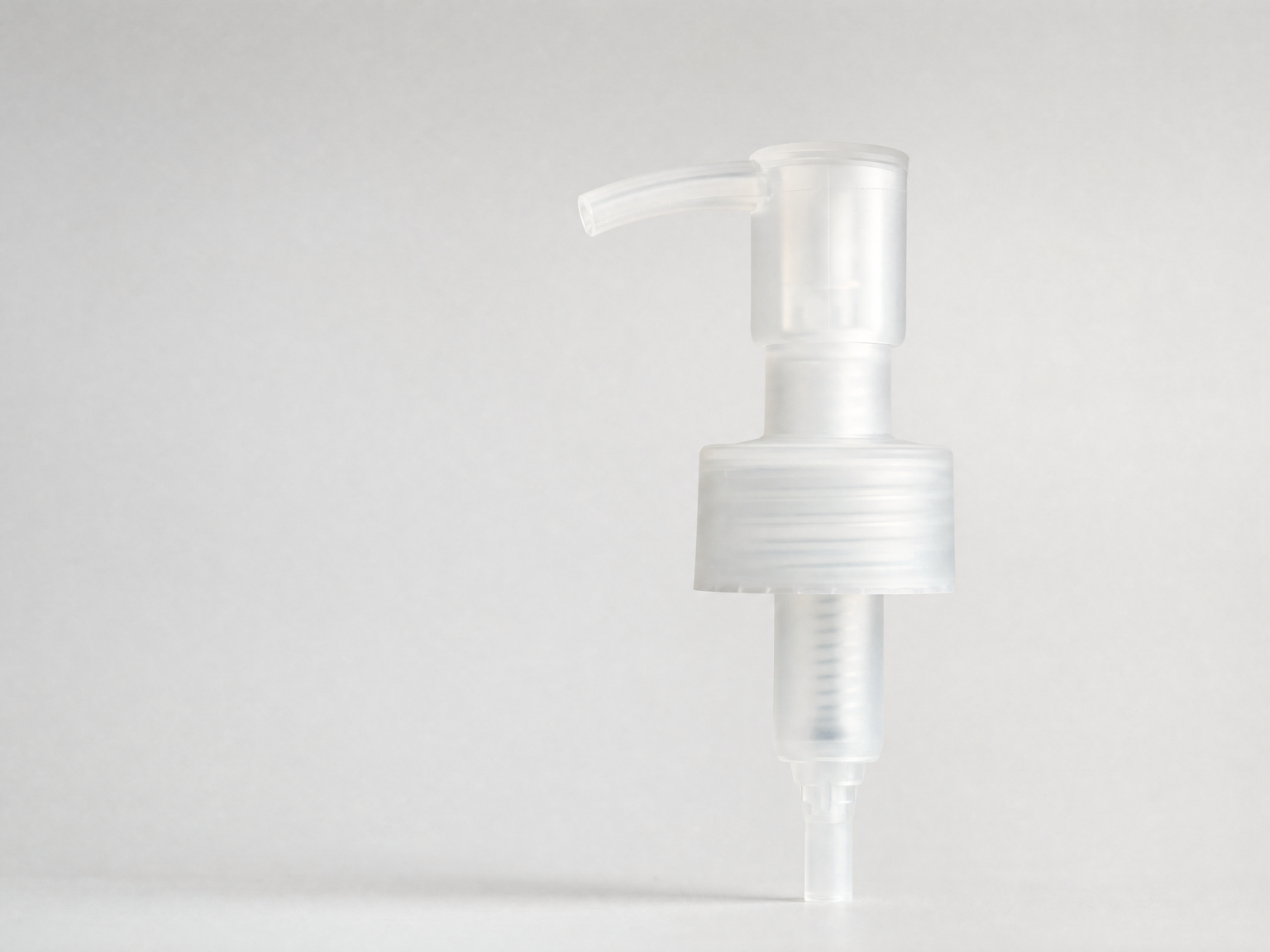
One of the most common mistakes in packaging procurement is treating the pump as a universal component that can work across all product lines. In reality, pump selection should be driven by the physical and chemical properties of the formula — primarily viscosity and pH. Using the same pump for a toner, a body lotion, and an acid serum is a recipe for dispensing failure, material degradation, and brand damage.
Target Audience: Beauty brand formulation chemists, product managers, packaging engineers, and procurement decision-makers planning pump selection for multiple product categories or troubleshooting dispensing issues.
TL;DR
- Core Insight: Viscosity determines pump architecture and dispensing capability; pH determines material compatibility and long-term stability. Ignoring these parameters and using one pump across all categories is the leading cause of dispensing failure.
- Key Data: Industry statistics show ~35% of pump complaints stem from viscosity mismatch, and ~22% from pH incompatibility causing material swelling or corrosion.
- Action: Establish a four-step formula-driven selection流程: formula characterization → pump type筛选 → material锁定 → accelerated verification.
A Common Mistake: "This Pump Sells Well — Let's Use It for Everything"
A domestic brand expanding its product line in 2023 applied a standard 24/410 lotion pump (1.2cc/stroke, suitable for 100–1,500 cPs) across four new lines:
| Product Line | Viscosity (cPs, 25°C) | pH | Actual Dispense Performance |
|---|---|---|---|
| Clarifying shampoo | 800 | 5.5 | ✅ Normal |
| Amino acid body wash | 2,200 | 6.0 | ⚠️ 40% more actuation resistance, unstable output |
| AHA body lotion | 8,500 | 3.8 | ❌ Frequent clogging, failure after 3 presses |
| Alkaline cleansing mousse | 120 (pre-foam) | 9.2 | ❌ Spring rust within 14 days, seal swelling/deformation |
Results: Body wash complaints of "can't press," 6.2% return rate; 18% of body lotion batches had pump clogging; entire ¥87,000 batch of mousse packaging scrapped due to rust.
Viscosity: The First Gate
How Viscosity Affects Pump Mechanics
- Low viscosity (< 200 cPs): Low flow resistance, standard pump works well. Below 50 cPs, may need precision valve design to prevent dripping or spitting.
- Medium viscosity (200–3,000 cPs): Needs larger pump chamber, stronger spring, wider flow channels. Otherwise actuation resistance becomes unacceptable.
- High viscosity (> 3,000 cPs): Standard pump engine cannot generate sufficient negative pressure. Liquid无法 effectively drawn into pump chamber, resulting in "won't dispense" or drastically reduced output.
Product Viscosity Range & Recommended Pump Type
| Category | Typical Viscosity (cPs, 25°C) | Recommended Pump Type |
|---|---|---|
| Toner / facial mist | 1–50 | Fine mist sprayer / treatment pump (20–80μm droplet, 0.1–0.25cc) |
| Hand soap / thin shampoo | 50–500 | Standard lotion pump / treatment pump (0.5–1.0cc) |
| Body wash / facial cleanser | 500–3,000 | Standard lotion pump, reinforced spring (1.0–1.5cc) |
| Body lotion / conditioner | 3,000–10,000 | High-viscosity lotion pump / airless pump (1.5–2.0cc, large flow channel) |
| Hair mask / body butter | 10,000–50,000 | High-viscosity pump / jar + scoop (2.0–3.0cc) |
| Cleansing oil / essential oil | 50–500 (oil-based) | Oil pump / suction-back pump (oil-resistant FKM/silicone seals, anti-drip) |
pH: The Second Gate — Material Life and Death
Material pH Tolerance Windows
| Material | Component | pH Tolerance | Failure Mode |
|---|---|---|---|
| PP (Polypropylene) | Body, actuator, closure | 2–12 | Stress cracking under strong oxidizing acids |
| PE (Polyethylene) | Dip tube | 3–11 | Brittleness, discoloration under strong acids |
| 304 Stainless steel | Spring | 4–10 | Accelerated corrosion below pH 4 or above pH 10; worse with Cl⁻ |
| NBR (Nitrile rubber) | Seal | 5–9 | Volume swell > 15% under strong acid/base → seal failure |
| Silicone (VMQ) | Seal (upgraded) | 1–13 | Broad chemical resistance, 2–3× cost of NBR |
| POM (Polyoxymethylene) | Ball valve, piston | 4–10 | Decomposition under strong base (pH > 10), releasing formaldehyde |
Risk Matrix by Product pH
| Product Category | Typical pH | At-Risk Materials | Recommended Action |
|---|---|---|---|
| AHA/BHA serum | 3.0–4.5 | 304 spring (rust), NBR seal (swell) | External spring + silicone seal |
| AHA/BHA cleanser | 3.5–5.0 | Same as above | All-plastic pump (metal-free) or external spring |
| Standard shampoo / body wash | 5.0–6.5 | Low risk | Standard PP + 304 spring + NBR |
| Amino acid cleanser | 5.5–6.5 | Low risk | Standard configuration |
| Soap-based / alkaline shampoo | 8.5–10.5 | POM ball valve, NBR seal | PP ball valve + silicone seal |
| Chlorine bleach cleaner | 10–13 | All metal + NBR | All-plastic pump + special chemical-resistant materials |
The Four-Step Formula-Driven Selection Process
Step 1: Measure the Formula's Physicochemical Fingerprint
- Viscosity: Brookfield viscometer at 25°C, 5°C, and 40°C
- pH: pH meter at 25°C
- Surface tension: Ring/plate tensiometer (for spray pump selection)
- Solids content / particle size: Laser particle analyzer if suspended particles present
- Active ingredient sensitivity: Accelerated stability test (40°C/75%RH, 30 days)
Step 2: Filter Pump Type by Data
Viscosity < 200 cPs + mist needed → Fine mist sprayer
Viscosity 200–3,000 cPs + liquid/cream → Standard lotion pump (adjust spring as needed)
Viscosity 3,000–10,000 cPs + paste → High-viscosity lotion pump / airless pump
Viscosity > 10,000 cPs + thick solid → Airless pump / jar (non-pump solution)
pH < 4.5 or strong acid active → External spring + silicone seal / all-plastic pump
pH > 9.0 or strong base → PP ball valve + silicone seal / all-plastic pump
High organic solvent (> 20% ethanol/IPA) → All-plastic pump + FKM seal
Step 3: Material Lock & Supplier Confirmation
Provide the supplier with: formula viscosity (25°C and 5°C), pH and buffer type, key active ingredients, target dispensing volume, and temperature range. The supplier should respond with: recommended pump model, material清单 (with grades), dispensing volume range and accuracy, and compatibility test protocol.
Step 4: Accelerated Verification
- Functional verification: 3 batches × 10 units, test with actual formula, CV < 5%, actuation force < 3N
- Compatibility verification: 40°C/75%RH for 30 days, check spring rust, seal swell, body discoloration, odor
- Extreme verification: 5°C low-temperature dispensing + ISTA 2A vibration test
- Batch consistency: Request supplier's past 6 months PPM defect rate data for the model
GreenYard's Formula-Driven Selection Service
GreenYard provides comprehensive formula-driven pump selection support:
- Formula compatibility analysis: Based on viscosity, pH, and active ingredient data, recommend optimal pump type and material combination
- Full category coverage: From fine mist sprayers (GY-608A1) to high-viscosity lotion pumps (GY-302B1/GY-320), covering 1–50,000 cPs
- Chemical-resistant material upgrades: External spring design, all-plastic pump options, silicone/FKM seals, PP ball valve替代 POM
- Accelerated verification support: 40°C/75%RH compatibility testing, low-temperature dispensing testing, transport simulation testing
- Global compliance: ISO 15378, FDA, REACH, RoHS, California Prop 65 full framework certification
Published by GreenYard Team on June 12, 2026. GreenYard is a leading manufacturer of sustainable pumps, sprayers, and cosmetic packaging for beauty, pharma, and personal care brands worldwide.